Down But Not Out: The Art of Pulling Off a Legendary Comeback
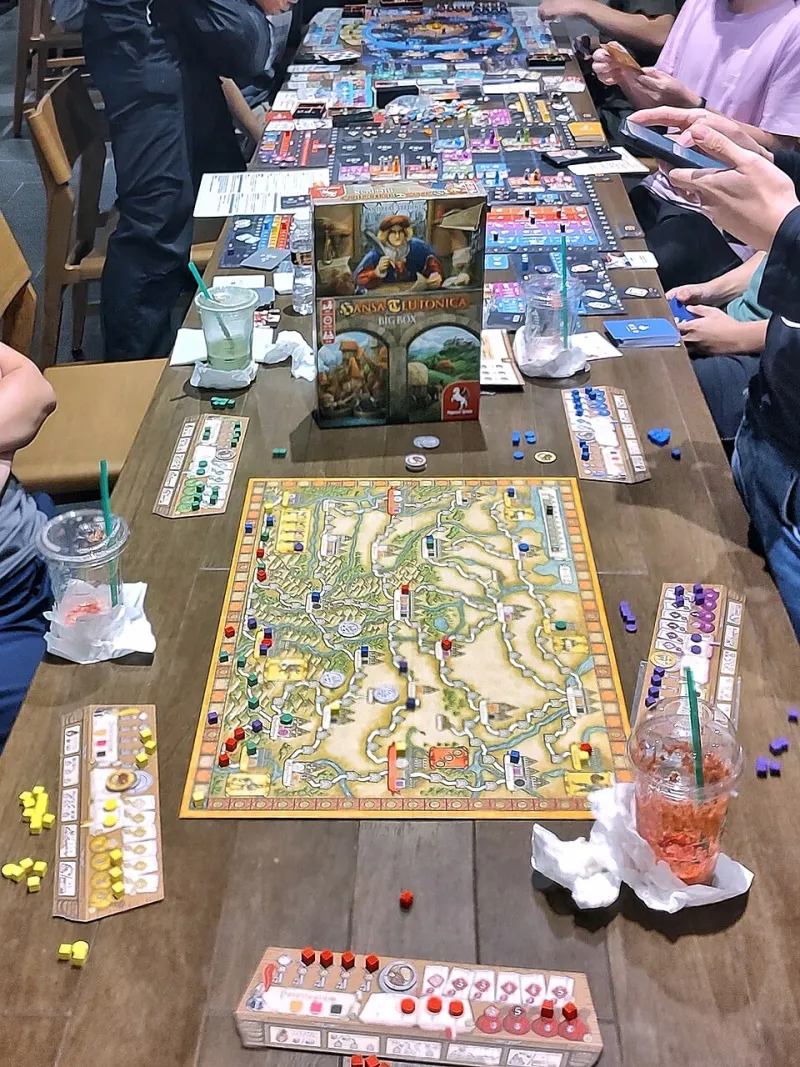
Photo: Cmglee, CC BY-SA 4.0, via Wikimedia Commons
There's a particular kind of silence that falls over a game table — or a Discord server — when someone is getting absolutely demolished. Chips are down, resources are gutted, and the scoreboard looks like a bad joke. Most players start mentally checking out at that point. But a select few? They lean in.
At BDG Game Hub, we've watched hundreds of tournament matches where the underdog rewrote the ending. And after talking to competitive players, dissecting game mechanics, and studying what separates the folders from the fighters, we've got a pretty clear picture of what actually makes a comeback happen. Spoiler: it's not magic, and it's not just luck.
The Psychology of Playing from Behind
Let's get real for a second. When you're trailing badly, your brain is not on your side. Cognitive scientists call it "loss aversion" — humans feel the pain of losing roughly twice as intensely as they feel the pleasure of winning. In a game context, that means a bad position doesn't just hurt your resources; it messes with your decision-making in real time.
Competitive players who consistently pull off comebacks have learned to interrupt that panic loop. Marcus T., a tournament regular in the Chicago board game scene, put it this way: "The moment I start thinking about how far behind I am, I've already lost. I force myself to only think about the next move. Just the next move."
That kind of tunnel focus — zeroing in on the immediate decision rather than the overall deficit — is something you can actually train. It's not a personality trait you're born with. It's a habit built through repetition, reflection, and a whole lot of getting your face kicked in at game night.
Reading the Room: When the Board Tells You Something Different
One of the biggest mistakes trailing players make is assuming their opponent is as locked in as the scoreboard suggests. Here's the thing: a player who's way ahead often gets comfortable. They start protecting their lead instead of pressing their advantage. That's your window.
In games like Catan or Ticket to Ride, a dominant player hoarding resources or routes can become predictable. In digital strategy games, a leading opponent might over-extend trying to close things out fast. Your job, when you're behind, is to stop playing your original game plan and start playing their psychology.
Ask yourself: What does my opponent want to protect? Where are they overconfident? A comeback rarely comes from doing the same thing harder — it comes from shifting the tempo entirely and forcing your opponent to react to you for the first time.
Resource Management: Doing More with Less
This is where the mechanical side of comebacks gets interesting. Almost every great game — board or digital — has a resource system of some kind, whether that's gold, cards, action points, or territory. When you're behind, you've almost certainly got fewer of these than your opponent. So efficiency becomes everything.
Trailing players can't afford waste. Every card played, every unit moved, every trade accepted needs to carry more weight than it would in a comfortable position. This is actually where experienced players have a significant edge over newer ones — they've learned to extract maximum value from minimum input.
In tournament play, some of the most dramatic reversals happen not because a player suddenly got lucky, but because they ruthlessly cut inefficiencies while their opponent kept playing loosely. A three-card hand played perfectly can outperform a seven-card hand played carelessly.
Timing Is Everything (Seriously, Everything)
Comeback attempts have a shelf life. Launch your counter-strategy too early and your opponent has time to adapt. Wait too long and the gap becomes mathematically insurmountable. Finding that sweet spot is part art, part calculation.
In board games with scoring phases or end-game triggers, understanding when the game will end is just as important as understanding how you're going to close the gap. Veteran players often deliberately slow down the game's pacing when they're behind — blocking paths, forcing re-routes, creating friction — to buy themselves more turns to work with.
In real-time digital games, timing a comeback surge during an opponent's resource drought or defensive transition can flip momentum in seconds. The best players track these cycles almost subconsciously, but you can absolutely make it a conscious habit by reviewing replays and asking: "When was the moment the tide could have turned? Did I see it?"
The Positioning Play: Setting Up Moves You'll Make Three Turns Later
Here's something the best comeback artists understand that casual players often miss: a reversal rarely happens in one dramatic move. It's usually the result of three or four quiet, almost invisible setups that suddenly click into place.
Great players think in sequences. When they're behind, they're not looking for the one magic move that fixes everything — they're planting seeds. Positioning a piece here, stockpiling a certain resource there, building toward a combination that their opponent won't see coming until it's already happening.
Jamila R., who competes regularly in regional strategy game tournaments out of Atlanta, described it like this: "I try to make my comeback invisible for as long as possible. The second my opponent realizes what I'm doing, they'll shut it down. So I move quietly until I can't be stopped."
That kind of delayed gratification requires patience and confidence — confidence that your plan is going to work even when the board still looks bleak.
Tournament Moments That Prove It's Possible
If you need motivation, look no further than competitive gaming history — both tabletop and digital. Board game championships have seen players come back from point deficits that looked unrecoverable. Esports tournaments have delivered jaw-dropping reversals in the final minutes that sent arenas into absolute chaos.
These moments aren't anomalies. They're proof of concept. They happened because someone refused to accept the obvious outcome and kept executing with discipline and creativity.
At BDG Game Hub tournaments, we've seen it firsthand — players who were written off completely by the table, who looked done, and then quietly, methodically dismantled the leader's advantage piece by piece. It never gets old.
Building Your Comeback Toolkit
So what's the actual takeaway here? A few things worth practicing:
- Stay present. One move at a time. The gap on the scoreboard is information, not a verdict.
- Study your opponent's comfort zone. A confident leader is often a complacent one.
- Maximize efficiency. Less is only more if you treat every resource like it matters.
- Time your surge. Patience isn't passive — it's strategic.
- Think in sequences, not single moves. Set up your win before your opponent knows it's coming.
Comebacks aren't about waiting for luck to show up. They're about creating conditions where a reversal becomes possible, then executing when the moment arrives. The board doesn't care how far behind you are. It only cares what you do next.
So the next time you're sitting across from someone who looks untouchable, remember: the game isn't over until it's over. And at BDG Game Hub, we've seen enough endings to know that the best ones are almost never the obvious ones.