Every Move You Make, They're Watching: The Hidden Psychology of Gaming Tells

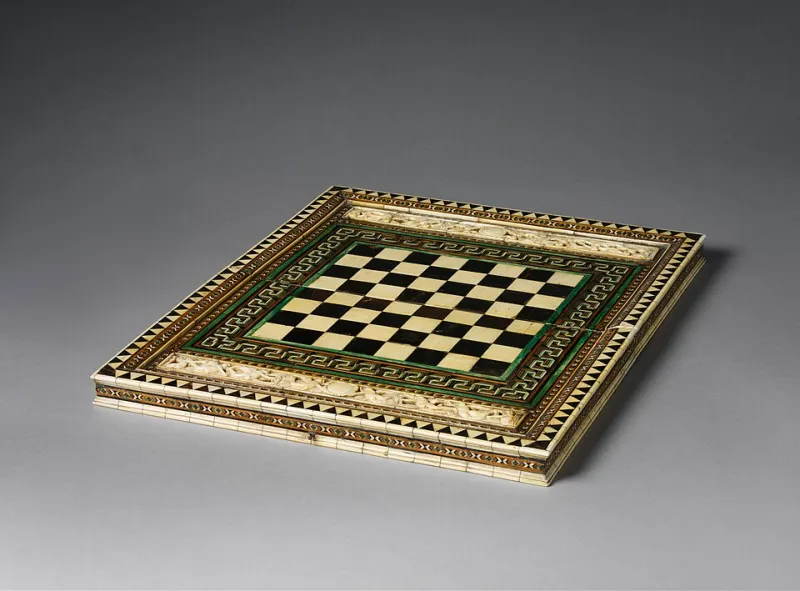
Photo: The J. Paul Getty Museum, Los Angeles, CC0, via Wikimedia Commons
You've probably heard the term "poker face" a thousand times. But here's the thing — that concept doesn't live exclusively at a Vegas card table. It shows up at your kitchen table during Catan. It's alive and well at your local game shop's Friday night tournament. And if you've never thought about what your body language, timing, and habits are broadcasting to everyone around you, there's a real chance someone across the board already has.
Welcome to the quieter side of competitive gaming — the psychological layer that doesn't show up in any rulebook but absolutely determines who walks away with the win.
What Even Is a Gaming Tell?
In the simplest terms, a tell is any unconscious signal that reveals information about your mental state or strategy. Most people associate tells with poker, where a player might tap their chips when they're bluffing or glance at their stack when they're confident. But the same principle applies across virtually every competitive game format, whether you're playing Twilight Imperium, competitive chess, or a heated round of Ticket to Ride.
The difference in tabletop and board game settings is that tells tend to be subtler and more behavioral. Nobody's going all-in with chips here — but players are still reacting, hesitating, organizing, and moving in ways that leak information constantly.
Experienced players don't just play the board. They play the people sitting around it.
The Big Four: Tells That Show Up Most Often
Timing hesitation. This one's massive. When a player takes noticeably longer to make a move than usual, it often signals genuine uncertainty — or a deliberate attempt to obscure confidence. On the flip side, moving too quickly can mean someone is either extremely comfortable with the position or trying to project false confidence. Sharp players track your average decision time and notice the deviations.
Piece arrangement habits. How someone organizes their components, cards, or resources says a lot. A player who suddenly starts grouping certain cards together, or shifts their pieces to one side of the board, may be telegraphing a consolidation strategy or preparing for an aggressive push. These micro-arrangements often happen before the player even consciously commits to a plan.
Reaction to other players' moves. Watch someone's face — or even just their posture — when an opponent does something unexpected. A barely-there flinch, a quick exhale, a subtle lean forward. These reactions often reveal whether a move disrupted someone's plan or played right into it. Skilled competitors learn to mask these reactions, but it takes deliberate practice.
Verbal patterns and table talk. What someone says, how often they say it, and when they go quiet all carry weight. A player who's been chatty all game and suddenly goes silent might be in full calculation mode. Someone who starts asking pointed questions about another player's resources might be probing for weaknesses rather than making conversation.
Why This Matters More in Competitive Play
At a casual game night, none of this is a big deal. But the moment you step into a competitive environment — a local tournament, a ranked ladder, a convention event — the psychological layer of play becomes a legitimate strategic tool.
Think about it this way: two players of nearly identical skill level sit down across from each other. The one who can read micro-signals and adjust their strategy accordingly has a measurable edge. Not because they're cheating or manipulating — but because they're operating with more information.
This is something elite competitors in games like Magic: The Gathering, chess, and even Dungeons & Dragons organized play have understood for years. The game on the table is only part of the contest. The game happening in everyone's heads is the other half.
How to Start Noticing (Without Being Creepy About It)
You don't need to stare down your opponents like you're in a standoff. That's not the move. What you want to develop is a relaxed, ambient awareness — the kind that lets you absorb information without telegraphing that you're paying attention.
Start small. Pick one player at the table during your next session and just notice their timing. Do they move fast or slow? Do they vary? Don't analyze yet — just observe. Over a few sessions, you'll start building a baseline for how that person operates when they're comfortable versus when they're stressed.
From there, add a second variable. Maybe it's how they handle their cards or pieces. Maybe it's when they make eye contact. Layering your observations gradually is more sustainable than trying to track everything at once.
Also worth noting: the best way to understand tells is to catch yourself having them. Pay attention to your own habits. When do you hesitate? What do you do with your hands when you're unsure? Self-awareness is the foundation of table awareness.
The Flip Side: Controlling What You Give Away
Once you understand that tells exist, you've got two jobs — reading others and managing your own signals.
One classic technique is deliberate pacing. Instead of moving at whatever speed feels natural, train yourself to maintain a consistent decision tempo regardless of how confident or uncertain you actually are. This removes timing as a readable variable.
Another approach is controlled neutrality. Practice keeping your face and body language steady whether you're executing a game-winning move or scrambling to survive. This doesn't mean being robotic — it means being intentional.
Some players go a step further and use what's sometimes called "false tells" — deliberately displaying signals that suggest one thing while planning another. This is advanced territory and can backfire badly if overused, but it's a real tool in the arsenal of experienced competitors.
The Community Angle: Respect the Table
Here at BDG Game Hub, we talk a lot about what makes a great competitor. And part of that is understanding that reading your opponents isn't manipulation — it's skill. The line gets crossed when psychological tactics tip into harassment, intimidation, or bad-faith behavior. There's a difference between noticing that someone hesitates when they're uncertain and deliberately stressing them out to trigger that hesitation.
The best players in any community know the difference. They compete hard and they compete clean.
So the next time you sit down at the table, remember: the board is only showing you half the game. The other half is sitting right across from you, quietly watching every move you make — and hoping you're not watching back.
Are you?