When Talking Becomes Cheating: The Great Table Talk Debate Dividing Gaming Communities
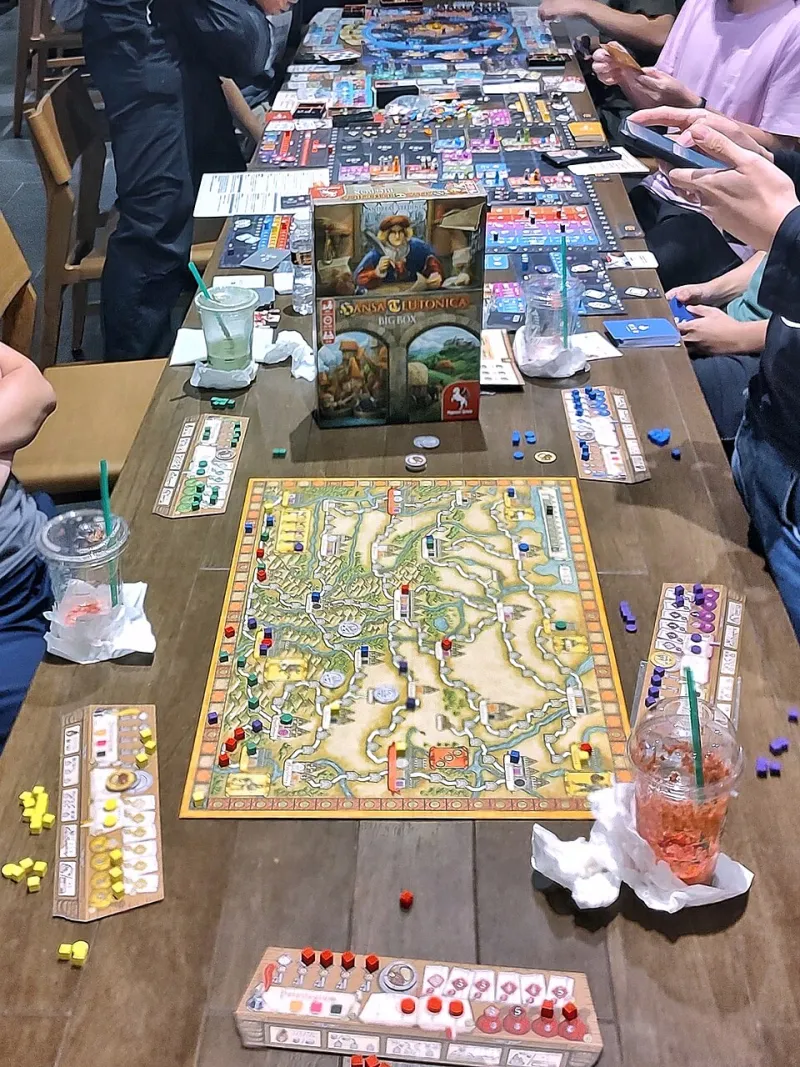
Photo: Cmglee, CC BY-SA 4.0, via Wikimedia Commons
Picture this: You're two rounds deep into a competitive game at your local hobby shop tournament. Your opponent leans back, smirks, and casually mutters, "Interesting move. Bold choice." Was that just small talk? A psych-out? Or something that should get them flagged by a judge?
If you've spent any real time in competitive gaming circles—board games, card games, tabletop strategy, you name it—you've probably bumped into this exact situation. What's considered fair banter and what crosses into manipulation is one of the messiest, most passionately argued topics in gaming communities right now. And as more players move from casual kitchen-table sessions into organized tournament play through hubs like BDG Game Hub, the stakes around these unwritten (and increasingly written) rules are rising fast.
The Spectrum from Friendly to Foul
Not all table talk is created equal. At one end, you've got the kind of lighthearted chatter that makes game night worth showing up for—jokes about bad dice rolls, compliments on a clever play, the classic post-game debrief over pizza. Most players agree this is the soul of the hobby.
But slide a little further down the spectrum and things get murky. Comments designed to distract, questions that fish for information, or remarks that subtly hint at what another player should do—these are the gray zones that tournament organizers across the country are trying to legislate with increasing precision.
Regulations vary wildly depending on the game and the organization running the event. Magic: The Gathering tournaments under Wizards of the Coast rules have long maintained strict guidelines around what players can and can't communicate during matches. Meanwhile, many board game competitions—especially those run at the local or regional level—are still figuring it out on the fly.
"Every event I run, someone asks me about table talk before the first round even starts," says one tournament organizer who runs competitive events at a mid-sized game store in the Midwest. "It used to feel like a niche question. Now it's basically the first thing I address in the rules meeting."
Why This Tiny Rule Is Causing Giant Headaches
The reason table talk is such a hot-button issue comes down to what competitive gaming is actually testing. Most players enter tournaments to prove skill—strategic thinking, adaptability, pattern recognition. The moment someone can influence an opponent's decision through psychological pressure or misleading commentary, the competition stops being purely about game skill and starts being about social manipulation.
For some players, that's just part of the game. Poker players have been reading tells and throwing off opponents verbally for centuries. Negotiation and bluffing are core mechanics in games like Diplomacy or Cosmic Encounter, where talking is the game.
But in games where the rules don't explicitly include social deception as a mechanic—your Catan tournament, your competitive Ticket to Ride bracket, your local Wingspan championship—unsolicited psychological pressure starts to feel like an exploit rather than a skill.
"There's a big difference between playing the game and playing the person," explains a competitive player from the Pacific Northwest who regularly participates in regional board game circuits. "I signed up to test my strategy, not to deal with someone trying to get in my head."
How Different Communities Are Drawing the Line
Some organizations have gone full rulebook on the issue. Certain competitive card game circuits now explicitly prohibit any comment that could be interpreted as coaching, hinting at game state, or deliberately misleading an opponent about rules. Violations can result in warnings, game losses, or disqualification depending on severity.
Other communities are taking a softer, culture-first approach. Rather than policing every word, they're investing in pre-tournament conversations about sportsmanship—leaning on community norms rather than hard rules to keep things civil.
Then there's a growing middle-ground movement: structured table talk policies that define categories of acceptable and unacceptable communication. Under these frameworks, complimenting a move is fine. Commenting on the game state is a warning. Deliberately misleading a player about rules is an automatic penalty. It's not perfect, but it gives judges something concrete to work with.
The challenge is enforcement. Unlike a rules violation that leaves a paper trail on the board, verbal infractions are fleeting and often subjective. He-said-she-said disputes at tournament tables are notoriously difficult to adjudicate fairly, which is exactly why some organizers are now experimenting with designated table monitors at high-stakes events.
The Casual Player Caught in the Crossfire
Here's where things get especially complicated for the average player who's just starting to dip their toes into organized competition. The habits built during casual game nights—the trash talk, the helpful hints, the running commentary—can accidentally become infractions in a tournament setting.
New competitors often don't realize that the comment they've been making at kitchen-table games for years might draw a judge's attention at a formal event. This disconnect between casual culture and competitive protocol is one of the biggest reasons first-time tournament players feel blindsided.
The advice from seasoned players is pretty consistent: read the specific rules for every event you enter, and when in doubt, keep your mouth shut during active play. Save the banter for between rounds.
"I always tell newer players—the table is not the place to make friends during a match," says a veteran competitor who's played in tournaments across multiple states. "Be warm before the game, be gracious after. But during? Focus."
What This Means for the Future of Competitive Play
As gaming communities continue to grow and more players make the jump from casual enthusiast to competitive participant, the pressure to standardize table talk rules is only going to increase. National organizations are watching how local circuits handle these issues, and there's real momentum toward creating more unified guidelines that can travel across different game systems and event formats.
Some players worry that over-regulation will strip the personality out of the hobby—that gaming without any social spontaneity becomes cold and mechanical. Others argue that clear rules actually protect the community by creating a level playing field where everyone knows what to expect.
Both sides have a point. The best competitive environments manage to hold both truths at once: firm enough rules to keep competition fair, loose enough culture to keep the game human.
At BDG Game Hub, we believe the board is for everyone—the strategists, the social players, the weekend warriors, and the serious competitors. But ruling the board means understanding the full ruleset, including the ones nobody wrote down until now.
Next time you sit down at a tournament table, think before you speak. That offhand comment might mean more than you intended—and a lot more than you bargained for.