Who Goes First? The Power Politics Hidden Inside Every Game Night
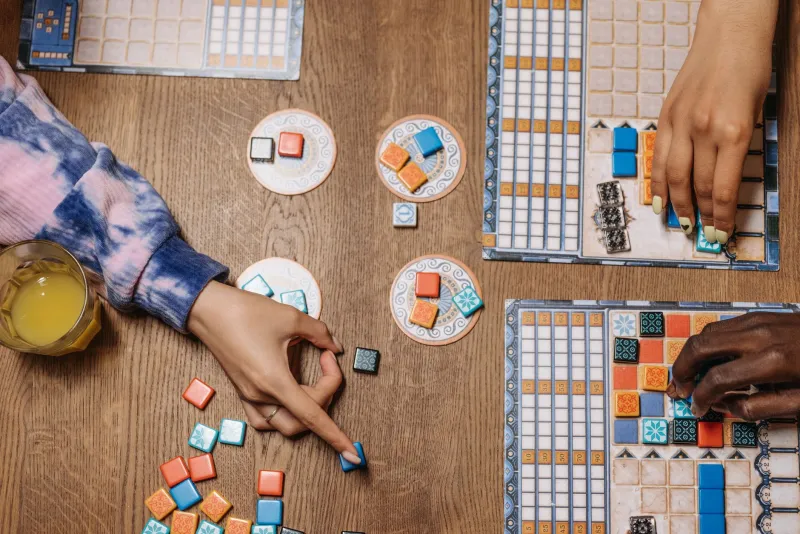
You've probably never stopped mid-shuffle to think about it. Someone just... goes first. Maybe it's the person who brought the game. Maybe it's whoever sat down fastest. Maybe it's always the same guy — let's call him Dave — and nobody questions it anymore because that's just how things go.
But here's the thing: that moment, right before the first card gets drawn or the first piece hits the board, is loaded with more social weight than most players ever realize. Turn order, seating position, and player selection aren't just logistical housekeeping. They're where the invisible hierarchy of your gaming group gets quietly reinforced every single session.
The First-Mover Advantage Is Real — and It Goes Way Beyond the Rules
In plenty of games, going first is a genuine mechanical edge. In Ticket to Ride, grabbing those high-traffic routes early can lock opponents out before they've even built momentum. In Catan, the first player in setup gets first pick of territory. Competitive players know this. Game designers know this too — which is why so many modern titles bake in compensation mechanics, like reverse setup order or bonus resources for later players.
But the advantage of going first isn't purely about in-game numbers. There's a psychological layer that's harder to quantify. The first player sets the tempo. They establish early presence. Everyone else is, on some level, reacting to them. That's not nothing.
When the same person consistently lands that spot — through social habit rather than any formal rule — they're collecting a small but real advantage over hundreds of game nights. Multiply that across a year of weekly sessions and you start to understand why it matters.
The Rituals We Use (And What They Actually Signal)
Every group has its own system for deciding who goes first, and almost none of them are as random as they feel.
Youngest player starts. Sounds cute and fair. But in a group where one person is noticeably younger than the rest, it's basically just assigning them permanent first-player status.
Whoever won last goes first. This one gets framed as a reward, but it's actually a compounding mechanism. Winners get the mechanical edge again. The rich get richer.
The host decides. Hospitality culture in the US runs deep, and game hosts carry a lot of informal authority. When the host quietly picks who goes first — even without announcing it — they're exercising social capital that most players don't consciously register.
Roll for it. Pure randomness, right? Technically yes. But watch how the table reacts when Dave rolls a one and someone else gets the start. There's often a beat of awkward silence. The expectation was already set.
These rituals feel neutral. They're not. They're tiny expressions of group power, repeated until they calcify into unwritten law.
Seating Arrangements: The Real Estate Nobody Talks About
Seat selection is its own conversation, and it runs parallel to turn order in ways that compound over time.
In games with player interaction — negotiation games, area control titles, anything with a kingmaking dynamic — who sits next to whom is strategic real estate. Experienced players know that sitting to the left of a strong opponent often means absorbing their aggression. Sitting to their right means you act before they do and can preemptively block their moves.
In a casual home setting, nobody's announcing this calculus out loud. But the players who've been around long enough are absolutely doing the math. And they're typically the ones who drift toward the "good" seats without making a fuss about it, while newer or less assertive players end up wherever's left.
This is how experience and social confidence quietly translate into positional advantage before a single die has been rolled.
What It Reveals About Your Group
Pull back the lens a little and these patterns start telling a bigger story about your gaming circle's actual social structure.
Is there one person who consistently ends up going first, sitting in the power seat, and getting their game suggestions greenlit for the evening? That's not coincidence. That's someone who's accumulated enough informal authority — through tenure, personality, or sheer persistence — to run the table without ever technically being in charge.
Groups that never examine these patterns tend to develop a quiet frustration that nobody can fully articulate. Newer players feel like they're always playing catch-up. Experienced players wonder why the same people keep winning. The answer is sometimes sitting right there in the seating chart.
Healthier groups — the ones that last, that grow, that actually recruit new members and keep them — tend to be more intentional about randomizing these decisions. Not because they're obsessed with fairness in some abstract sense, but because they've figured out that perceived fairness is what keeps everyone engaged and coming back.
How Tournament Play Forces the Conversation
This is one area where competitive play genuinely cleans things up. Organized tournaments — whether it's a local game store running a Dominion bracket or a regional Wingspan event — formalize turn order through seeding, random draws, or structured rotation. Nobody's deferring to Dave because Dave always goes first. The bracket says who goes first, and that's that.
For players who've spent years in casual settings, stepping into tournament play can feel almost liberating in this regard. The social subtext gets stripped away. You're not navigating personality dynamics or unspoken group hierarchies. You're just playing the game.
If you've ever felt vaguely unsettled by game nights without being able to pin down why, consider whether the casual power structures around turn order and seating might be part of it. Sometimes the path to a better casual experience is borrowing a little structure from the competitive world.
Small Changes, Big Shifts
You don't need to blow up your game night to fix this. A few low-effort adjustments can redistribute the informal power that's been accumulating in the same hands:
- Rotate the first-player token systematically each session rather than defaulting to habit.
- Randomize seating with a simple draw — playing cards work great for this.
- Let newer players choose their seat first as a counterbalance to the experience gap.
- Name the system out loud. Just saying "hey, let's actually roll for seats tonight" breaks the invisible script.
None of this is about policing fun or turning game night into a committee meeting. It's about making sure the board is actually level before the first move gets made — because the way you set up the game says a lot about the kind of game you're actually playing.
At BDG Game Hub, we talk a lot about strategy and what it takes to compete at a higher level. But some of the sharpest moves happen before the game even starts. Knowing who controls the table — and deciding whether that's still working for your group — might be the most underrated skill in the room.